Fishing Hook Icon: A Designer's Real-World Embroidery Review
As someone who has spent years stitching designs onto everything from delicate baby onesies to heavy-duty work aprons, I know that the difference between a good design and a great one often comes down to how it translates from a digital screen to a physical thread. Today, I am evaluating the Fishing Hook Icon, a simple line element fishing symbol intended for templates, web design, and infographics. While the product description highlights its versatility as a vector graphic in EPS, JPG, AI, and SVG formats, my focus is strictly on how this specific icon performs when converted into a machine embroidery design for real-world projects.
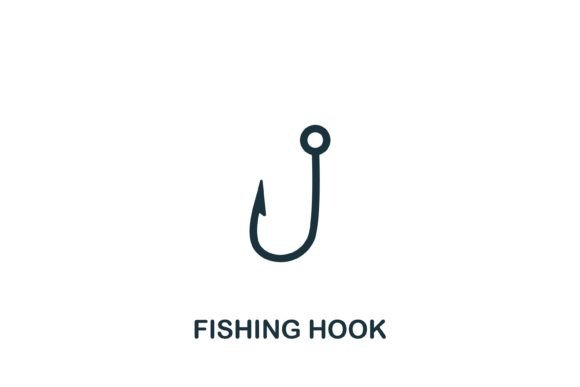
The first impression of the Fishing Hook Icon is one of clean minimalism. In the world of graphics, simplicity is usually a virtue, but in embroidery, it can be a double-edged sword. The shape suggests a classic J-hook with a sharp point and a curved body. Visually, it evokes a mood of leisure, outdoor adventure, and coastal living. It feels right at home in a summer cottage, a tackle shop, or a modern kitchen. However, before I would ever load this into an embroidery machine, I have to ask myself: does this simple line element hold up under the tension of thread?
Real-World Application: From Screen to Stitch
Let me walk you through a scenario I encounter frequently. Imagine a client coming to me with a request for a custom embroidered tote bag for a local fishing tournament. They want something subtle yet recognizable, not a massive, detailed scene of a fish jumping out of water. They are looking for a logo that represents their brand without overwhelming the canvas. This is where the Fishing Hook Icon enters the conversation.
If we were to digitize this file for a standard 4x4 hoop, the clean lines of the hook could translate beautifully into a satin stitch outline. The negative space within the curve of the hook allows for a breathable design that won't cause puckering on lightweight cotton canvas. For a tote bag, which is a staple for any Etsy seller or craft business owner, this icon offers high recognition value. It immediately communicates the theme without needing extra text. When a customer sees that single, elegant hook stitched onto a durable bag, they understand the vibe instantly. It elevates the perceived value of the handmade product, making it feel like a boutique item rather than a mass-produced souvenir.
However, let's consider a different use case: a sweatshirt for a small shop merchandise line. Sweatshirts are thick, textured fabrics that can hide fine details. If the Fishing Hook Icon is too thin in its original vector form, the resulting embroidery might look faint or get lost in the fabric texture. In this context, I would advise adjusting the stitch density or slightly widening the stroke width during the digitizing process. The goal is to ensure the hook stands out against the fleece without becoming a blob of thread. The clean geometry of the icon works well here, provided the thread color contrasts sharply with the garment.
Where Caution is Required
Not every project is a perfect fit for this design. As an experienced reviewer, I must point out where the Fishing Hook Icon might struggle. One significant challenge arises with small hoop sizes. If you attempt to stitch this on a very small patch or a hat brim using a tiny hoop, the sharp point of the hook becomes a risk. Satin stitches rely on stability; if the point is too narrow, the needle might push the fabric away, causing the tip to fray or the surrounding stitches to collapse. For tiny applications, a running stitch or a simpler geometric variation might be safer.
Another area requiring careful consideration is stretchy fabric. Trying to embroider a rigid, linear icon like a hook onto a stretchy jersey t-shirt or a cap requires a stabilizer that can counteract the fabric's movement. Without proper backing, the curve of the hook might distort, losing its symmetry. Similarly, on dark fabrics, a simple line element might lack visibility unless you use a bright, metallic thread or add a contrasting underlay. The "simple line" nature of the Fishing Hook Icon means it relies heavily on thread choice to make an impact.
Visual Appeal and Customer Trust
In the handmade market, presentation is everything. A well-executed Fishing Hook Icon signals professionalism. When a buyer receives a personalized gift, such as a holiday ornament or a nursery pillow featuring this design, the clarity of the stitches speaks volumes about the maker's skill. There is nothing that hurts a small business reputation faster than a design that looks sloppy or unfinished. Because this icon is based on a clean vector, it offers the potential for crisp edges and smooth curves, which builds trust with the end consumer.
Furthermore, the versatility of the design makes it a strong asset for commercial embroidery projects. Whether you are creating a set of matching kitchen towels for a wedding gift or branding a line of aprons for a cooking class, the Fishing Hook Icon provides a consistent visual anchor. It is unobtrusive enough to serve as a decorative accent but distinct enough to act as a primary logo. This balance is crucial for designers who need to create cohesive collections without relying on complex imagery that might date quickly.
Practical Notes for the Embroidery Designer
Before you commit to a production run, there are several technical steps you must take. First and foremost, always test the design on scrap fabric that matches your final material. You need to verify the stitch density and ensure that the sharp points of the hook do not tear the fabric. Check your thread colors carefully; a black hook on a navy background will disappear, while a white hook on white fabric will vanish entirely. Contrast is key for simple line elements.
You should also inspect the small details closely. Even though the design is simple, the transition from the curve to the point needs to be smooth. If the digitizing is poor, you might see jagged edges or loose threads. Confirm the hoop size requirements for your specific machine and ensure your stabilizer is adequate for the fabric weight. If you plan to sell finished items or digital products, double-check the licensing terms associated with the original vector files. Just because you own the EPS or SVG file does not automatically grant you commercial rights to resell the embroidered goods.
Finally, consider the durability of the finished product. Items like tote bags and aprons undergo frequent washing. Ensure that the fill stitches are secure and that the design will not snag easily. The Fishing Hook Icon is a fantastic tool for creative entrepreneurs, hobbyists, and makers who want to add a touch of nautical charm to their work. By understanding its limitations and leveraging its clean aesthetic, you can turn a simple vector graphic into a stunning piece of wearable art.
Ultimately, the decision to use the Fishing Hook Icon depends on your specific project goals. If you are looking for a versatile, clean, and professional design element for apparel, home decor, or small business branding, this icon is a strong contender. Just remember that in embroidery, the devil is in the details, and a little bit of pre-production testing goes a long way toward ensuring a successful finished product.